
Project Area

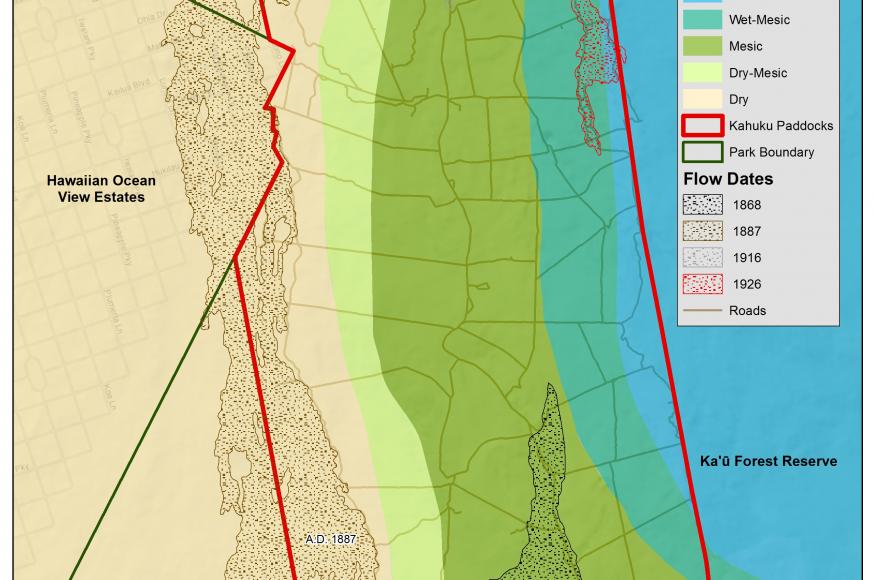
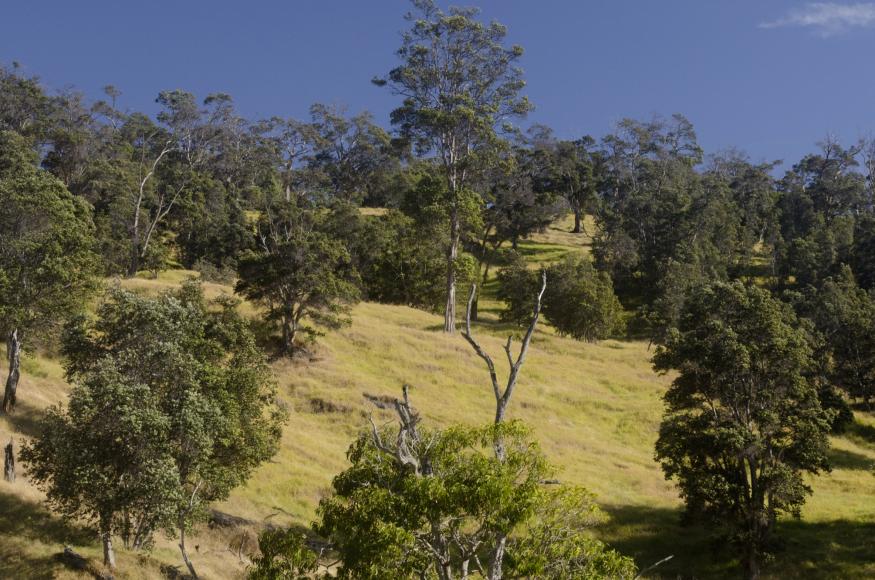
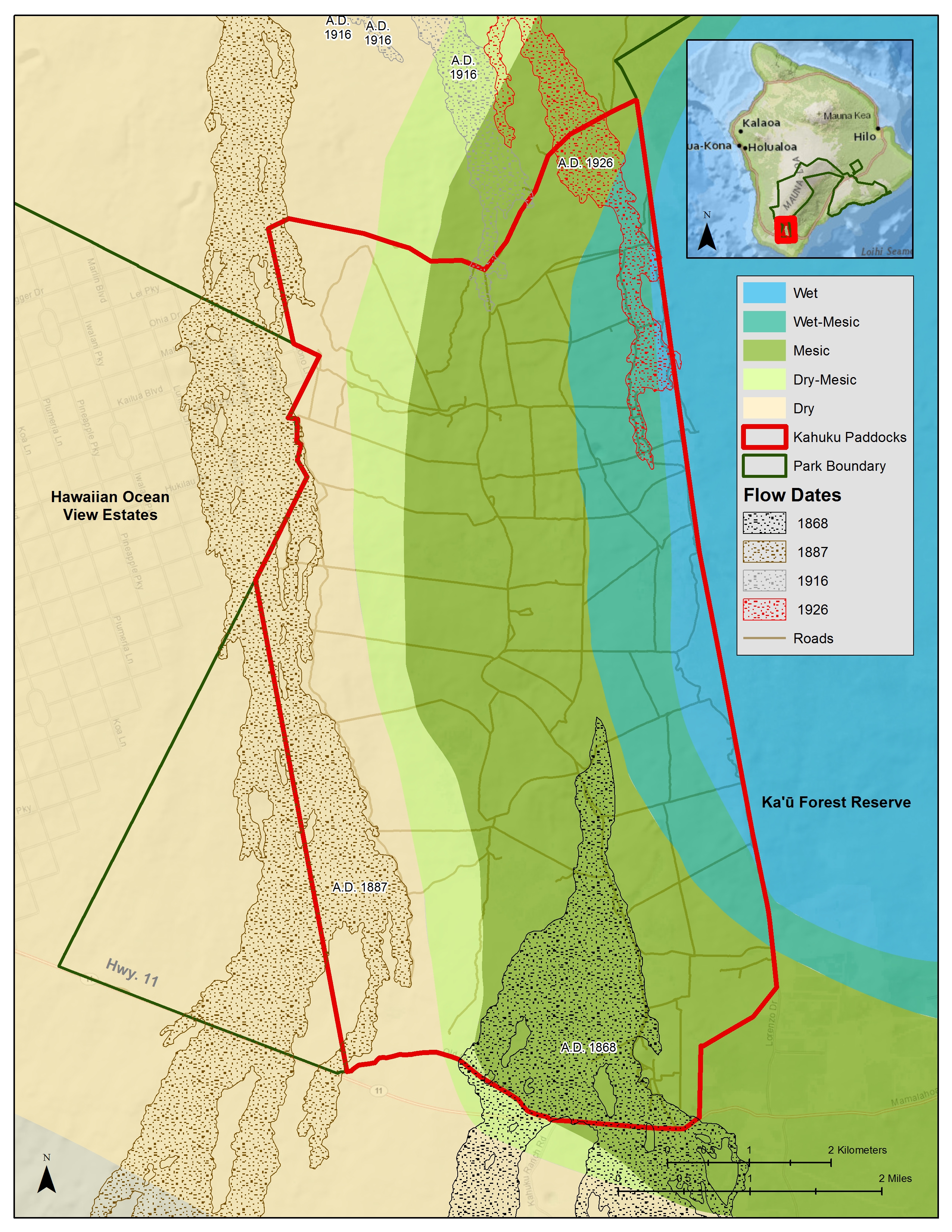
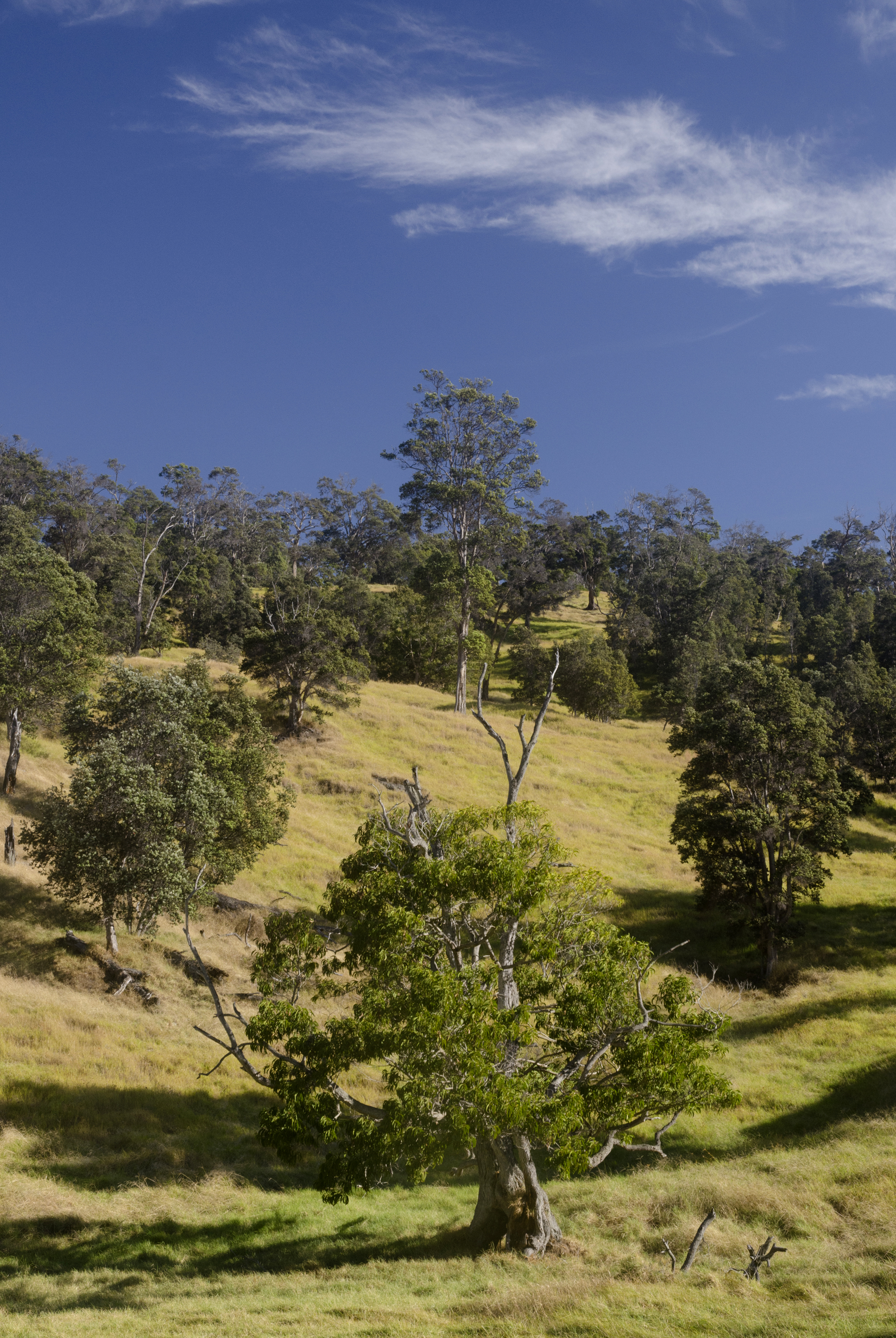
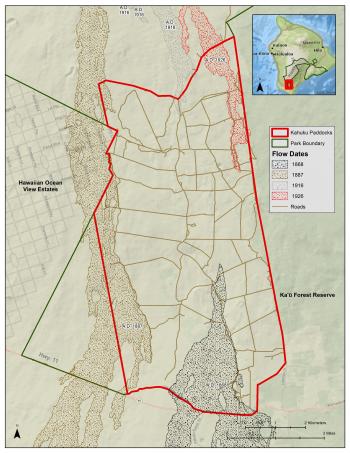 The project focuses on 1,200 of the 12,138 acres of former cattle pasture within the Kahuku Unit, acquired as part of Hawai‘i Volcanoes National Park in 2003. Kahuku sits on the southern slopes of Mauna Loa and holds a dynamic history of volcanic and human activity. In the last 150 years, Kahuku was grazed by cattle and cleared of forest understory. Most of the original native forest has been replaced by a savanna of scattered ‘ōhi‘a and koa trees and non-native pasture grass. Bands of native forest exist on the dry western edge of the pastures, while montane rain forest spans the wet eastern margin of the pastures. A broad range of diverse environments exist between these two extremes. Since 2004, the park has committed substantial resources to constructing boundary fences and excluding non-native ungulates. These introduced animals are the primary threat to native plant communities and wildlife. With these efforts, as well as those to remove select invasive vegetation, some native vegetation has recovered. However, increasing temperatures, drought frequency, and drought magnitude complicate recovery.
Management Goals


The goal of this project is to assist the recovery of a self-sustaining, biologically diverse, multi-layered native forest in Kahuku. Repairing fencing and removing remaining ungulates will minimize unintended disruption to vegetation. Restoration, replenishing, and monitoring of native plant species, in addition to invasive plant species control, will allow greater establishment of intended species. Preventing extinction of rare plant species requires increasing population sizes of rare, threatened, and endangered native plant species, as well as fortifying a genetic safety net. Creating a seed bank or nursery for extant species will foster this goal. Fuel loads from a history of grazing, matched with increasing temperature and drier conditions, necessitates fire preparation. Evaluating fuel breaks, re-positioning water sources, developing site closure protocols, and creating educational materials will better position Kahuku to prevent fires from occurring. Lastly, the appropriate funding for these goals needs to be acquired, either through grant applications or leveraging resources from existing programs in the area.
Climate Change Impacts
Challenges and Opportunities
Challenges
Opportunities
Adaptation Actions
Project participants used the Adaptation Workbook to develop several adaptation actions for this project, including: