
Project Area
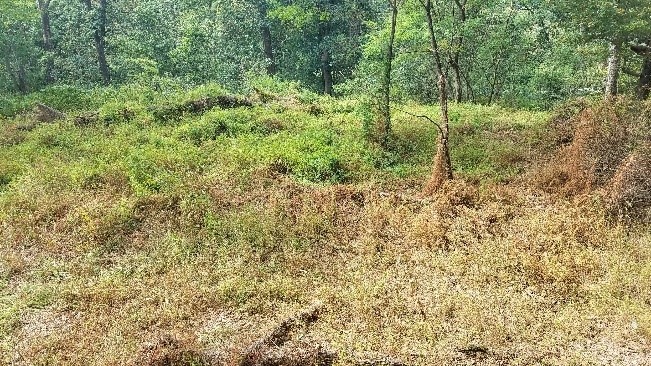
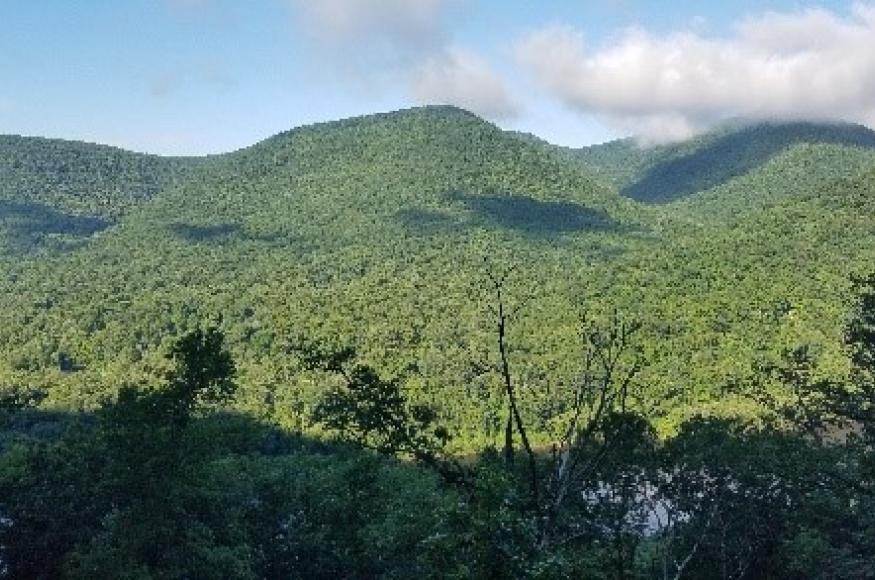
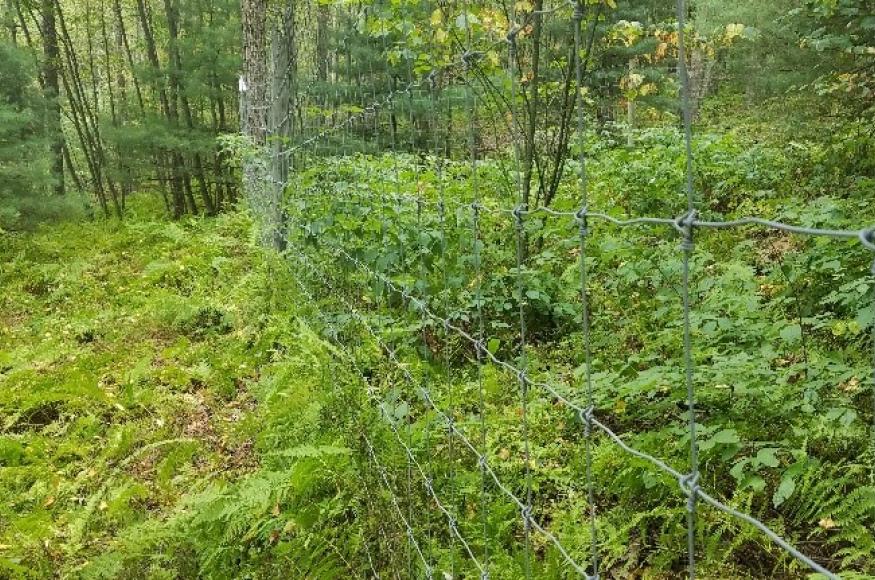
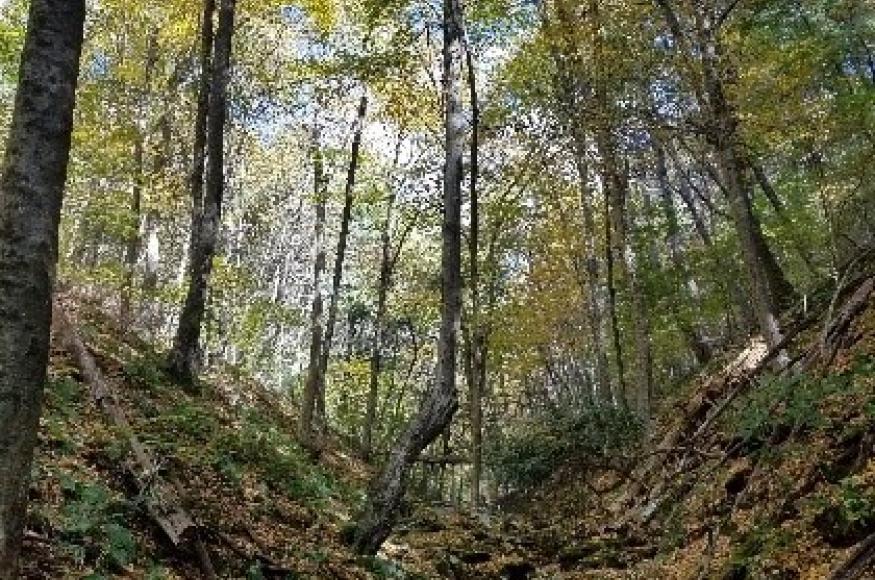
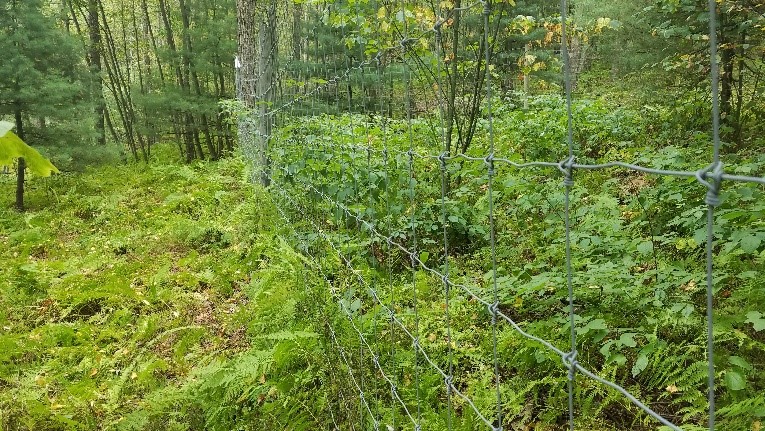
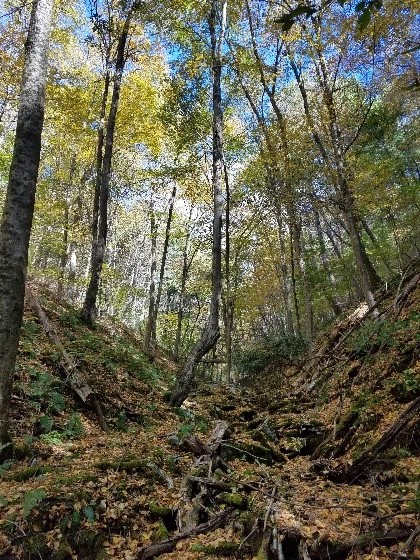
 West Branch Forest consists of even-aged dry oak forests with northern hardwoods limited to along streams. The topography is remote and steep with limited access. The most important factor influencing forest type appears to be soil moisture. Drier sites are dominated by xeric species like chestnut oak and black gum, as well as dense ericaceous shrubs like huckleberry and mountain laurel. The hollows running through the property contain a more diverse mix of species including more mesic associated species like sugar maple, eastern hemlock, and tulip poplar along with a more diverse herbaceous community. Portions of the property are degraded because of unsustainable timber harvesting in the 1990s. Deer browsing is problematic across the property and is suppressing new growth. Invasive plants, specifically Japanese stiltgrass and mile-a-minute, have become increasingly problematic over the last decade.
Management Goals
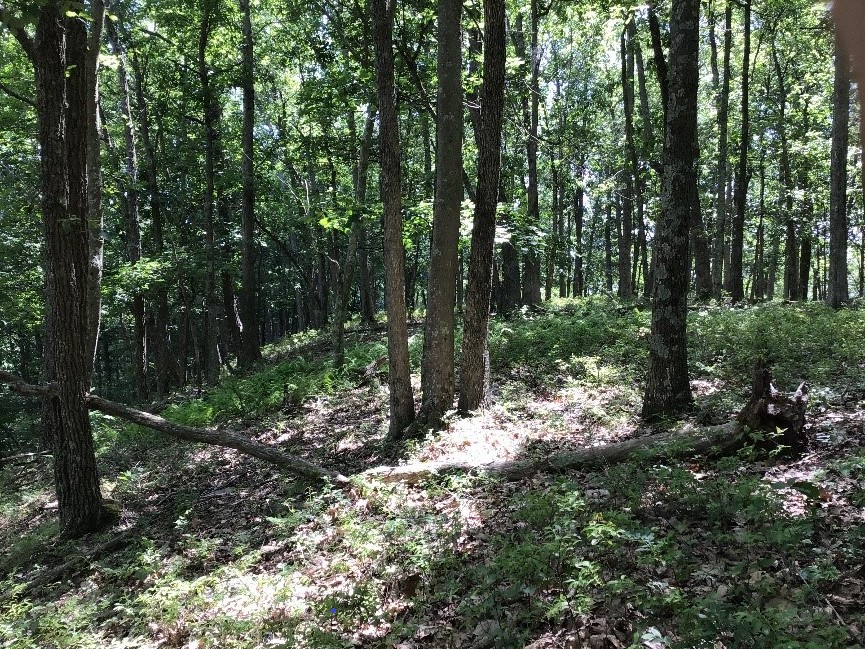
Overarching goals in these stands are to 1) Implement Natural Climate Solutions pathways to increase forest carbon sequestration and storage; and 2) Establish and maintain a productive and resilient forest. Specific objectives include 1) increasing property-wide forest carbon stocks by at least 20%; 2) rehabilitating degraded forest stands to enhance carbon sequestration; 3) balancing age classes by managing 5% of the property as young forest habitat while stable forest stands mature; 4) increasing the amount of large trees, saplings, and snags; 5) establishing advanced oak and northern hardwoods regeneration in appropriate stands; and 6) maintaining better forest stocking in riparian areas.
Climate Change Impacts
Challenges and Opportunities
Challenges
Opportunities
Adaptation Actions
Project participants used the Adaptation Workbook to develop several adaptation actions for this project, including:
9.1. Favor or restore native species that are expected to be adapted to future conditions.
9.2. Establish or encourage new mixes of native species.
5.2. Maintain and restore diversity of native species
1.2 Reforest lands that have been deforested and afforest suitable lands
5.1. Promote diverse age classes.
5.3. Retain biological legacies.
6.1. Manage habitats over a range of sites and conditions.
6.1 Increase structural complexity through retention of biological legacies in living and dead wood
9.3. Guide changes in species composition at early stages of stand development.
1.2 Reforest lands that have been deforested and afforest suitable lands
9.3. Guide changes in species composition at early stages of stand development.
9.5. Disfavor species that are distinctly maladapted.
9.1. Favor or restore native species that are expected to be adapted to future conditions