
• Start-up
  • Planning
  • Action
  • Evaluation
A variety of adaptation treatments will be implemented at this site within Groton State Forest, and monitored by researchers with the University of Vermont. The treatments are designed to test various approaches intended to regenerate and diversify the northern hardwoods component of the forest.

Project Area

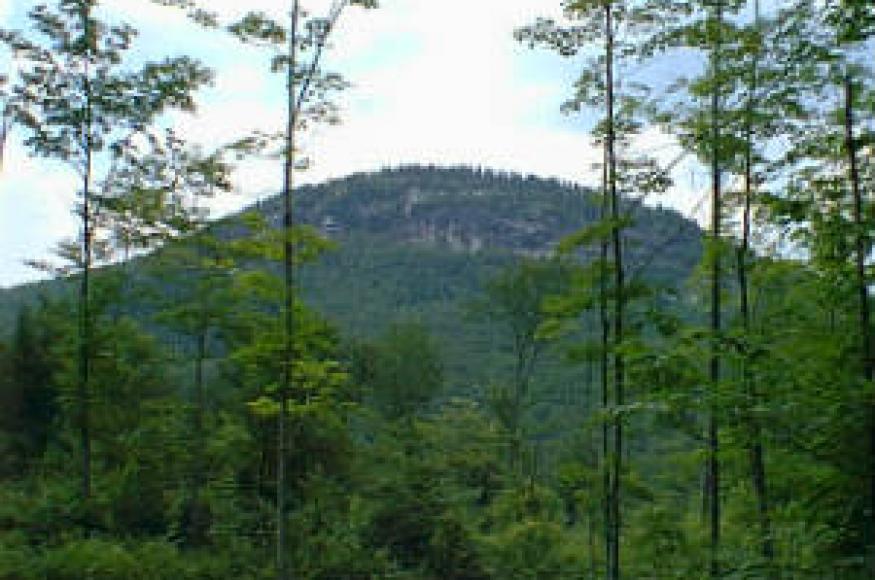
The project area is comprised of 81 acres in Groton State Forest, which is in Northern Vermont, just East of Montpelier and straddled by Vermont Route 2 to the North and 302 to the South. It has been in public ownership for over seventy years, and has a history of several decades of forest management. Past management activities at this site have led to low-quality northern hardwoods and a predominance of American Beech. The State Forest encompasses seven State Parks and a contiguous forest area of approximately 25,000 acres, and is heavily used for recreational purposes by the public.

Management Goals

The primary goal for this site is to effectively regenerate and diversify the northern hardwood community, while reducing the prevalence of American beech. The various harvesting and planting treatments developed for this study are intended to increase age class diversity, structural complexity, and diversify species composition.

Other related goals include: producing quality hardwood timber, increasing the softwood component, managing for ash in anticipation of EAB, increasing structural complexity (including downed woody material, tip-up mounds and legacy trees), protecting forest soils, maintaining wildlife habitat, and communicating the intentions and benefits of the harvest to the public.

Climate Change Impacts

Climate change is expected to impact forest ecosystems in Vermont into the future. These include warming of 5.3 to 9.1 °F by late century (2071-2100), with fewer days below freezing and an increase in the growing season by three weeks. On average, the climate is projected to get wetter with more frequent and damaging extreme storms, including intense rainfall that may cause soil erosion. Timing of precipitation is expected to change, with longer periods between rain events increasing the risk of moisture deficits and drought during the growing season. These changes may affect invasive plant and pest and disease pressure on forests in addition to limiting opportunities for winter harvesting. Northern species such as sugar maple, yellow birch, and white birch that comprise much of the canopy on the site are predicted to decline in the region. Northward migration of future-adapted species may be slower than the expected changes in climate that would create suitable habitat for these species, resulting in declining forest health and productivity over time.

Challenges and Opportunities

Climate change will present challenges and opportunities for accomplishing the management objectives of this project, including:

Challenges

The low species diversity at this site makes it less resilient to a variety of disturbances and climate change impacts.
The interaction of more frequent and intense periods of drought, defoliating insects and the Armilleria fungal pathogen threaten forest health and regeneration.
Potential for increased erosion of the already thin forest soil layer due to more intense precipitation events.
An Emerald Ash Borer infestation at an adjacent campsite threatens to spread into the project area.

Opportunities

The fact that invasive species are currently present only at a low-level on the site means that managers can more effectively respond as the threat of invasive species grows under climate change conditions and increased public use.
The appropriate window for winter harvesting is relatively longer at this site than in other areas of Vermont, meaning operability may not be impacted as soon by climate change.

Adaptation Actions

Project participants used the Adaptation Workbook to develop several adaptation actions for this project, including:

Area/Topic
Approach
Tactics
3 research treatments - Patch clearcut with no live-tree retention
All treatments will be approximately 9 acres
Remove all overstory trees from treatment unit, with the exception of existing snags and cavity trees
Pull over 4 whole trees across unit (large, low value) for creation of tip-up mounds
Fell and leave 8-10 whole trees per acre for downed dead wood
Plant bare-root seedlings of future-adapted northern hardwood species currently found near site in low abundance (red oak) and historically-important conifer species (red spruce, white pine) in spring following harvest (2022)
3 research treatments - Patch clearcut with dispersed retention
Remove all overstory trees from treatment unit, with the exception of existing snags and cavity trees, and retain 10% of overstory trees as reserves
Retention trees will be dispersed across site with priority given to large, low value individuals, resistant beech, beech with evidence of bear activity, conifers, white ash, and yellow birch
Pull over 4 whole trees across unit (large, low value) for creation of tip-up mounds
In cases where white ash is retained, consider insecticide treatments to prevent EAB impacts, particularly on female trees
Plant bare-root seedlings of future-adapted northern hardwood species currently found near site in low abundance (red oak) and historically-important conifer species (red spruce, white pine) in spring following harvest (2022)
3 research treatments - Patch clearcut with aggregated retention
Remove all overstory trees from treatment unit, with the exception of existing snags and cavity trees, and four 0.25-acre retention aggregates
Retention aggregates will be spread out across harvested area, and will be centered, where possible, on unique ecological features (seeps, vernal pools, snags, downed woody material, resistant beech, conifer inclusions)
Pull over 4 whole trees across unit (large, low value) for creation of tip-up mounds
In cases where white ash is retained, consider insecticide treatments to prevent EAB impacts, particularly on female trees
Plant bare-root seedlings of future-adapted northern hardwood species currently found near site in low abundance (red oak) and historically-important conifer species (red spruce, white pine) in spring following harvest (2022)
Entire project area (all treatments)
Summer harvest to maximize scarification and impact to beech advance regeneration
Identify individual white ash trees to consider saving and treating given likelihood of a future Emerald Ash Borer invasion
Increase dead and down wood where opportunities exist
Moose/deer/hare protection in the form of tree tubes on a subset of trees
Assess potential impacts on local recreation and public perception
Engage in communication with the public regarding the goals and intentions related to the harvest and the experiment.

Monitoring

Project participants identified several monitoring items that could help inform future management, including:
Tracking the success of natural regeneration and planted seedlings
Evaluating overstory and understory structure and species diversity in response to the silvicultural treatments
Density of downed woody debris with treatment areas
Public perception among State Forest users

Last Updated